Guided options
Cross the Lapa Arches by tram
The arches are free to see from the square. For the view from the tram and a guided walk through the surrounding neighbourhoods, consider this half-day outing.
The Lapa Arches look like a grand monument built to be photographed. They had a more practical first job: carrying water into colonial Rio. Later the structure became a tram viaduct, and the yellow Santa Teresa tram still gives the old aqueduct a moving role in the city. Stand below it for a few minutes and you can see three centuries of Rio in one view.
Lapa Arches at a glance
| Plan for | What to know |
|---|---|
| Where | Praça Cardeal Câmara, in Lapa |
| Time | 15–30 minutes for the monument; longer with Selarón Steps |
| Admission | Free to see from the public square |
| Best first visit | Daylight, combined with Cinelândia or Santa Teresa |
| Tram | View the yellow tram crossing above; board at the Carioca station |
The arches are a public landmark, so you can see them without a tour or ticket. A ride over them is a separate tram journey. Do not look for stairs onto the viaduct; the top is an operating rail route, not a public walkway.
Why are the Lapa Arches here?
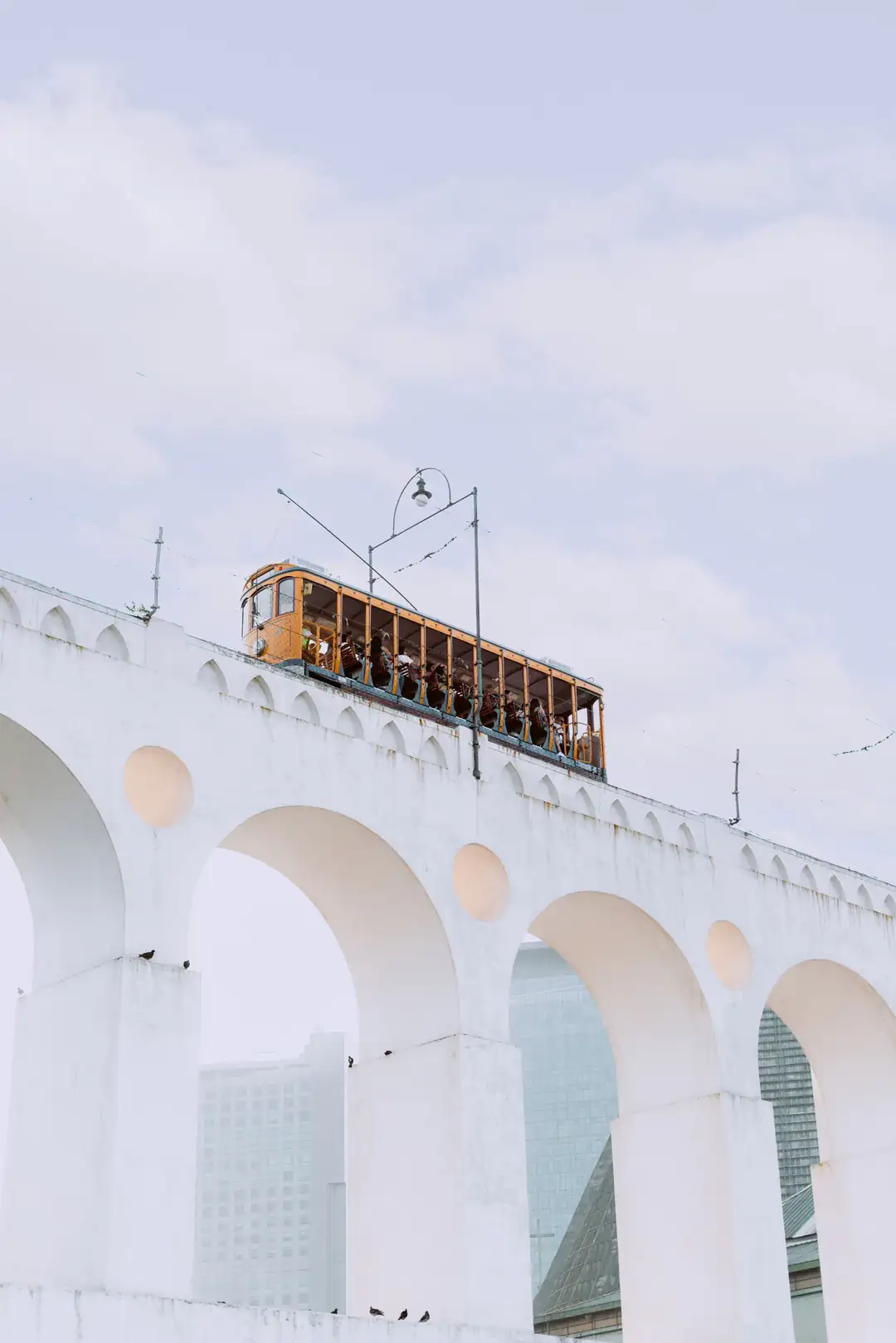
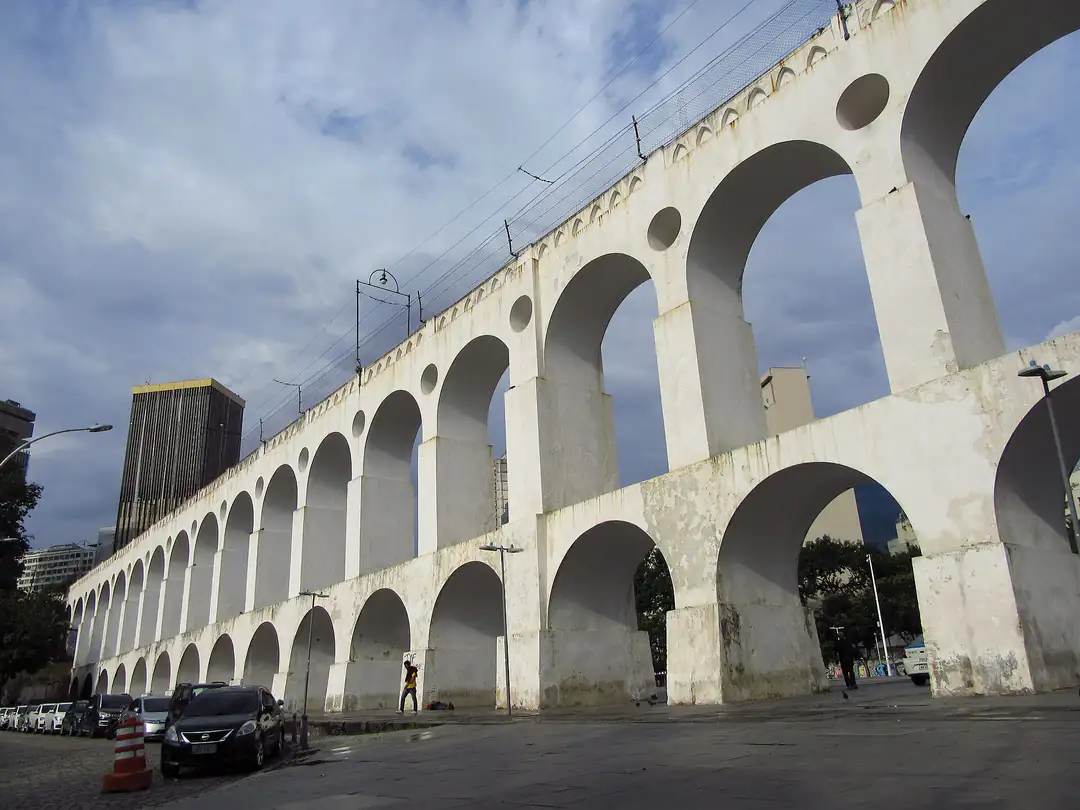
The structure is the Aqueduto da Carioca, completed in the eighteenth century to bring water from the hills into the growing city. Its double rows of arches made the crossing both useful and conspicuous. After Rio's water system changed, the aqueduct was adapted for the Santa Teresa tram in the late nineteenth century. That is why you may hear the tram above a monument that looks much older than any railway.
The arches are a good starting point for understanding Lapa, not a museum with explanatory rooms. If you want the longer neighbourhood story, continue with our Lapa guide. The public space below can be busy and noisy; that is part of seeing the monument in a living city.
Where is the best place to see them?
Start at Praça Cardeal Câmara and step back far enough to take in the full rhythm of the arches. Move to a side angle to see their depth and the tram track above. Daylight makes the pale stone easier to photograph and lets you orient yourself before exploring the neighbouring streets. If a tram passes, it is a bonus; service intervals can vary, so do not wait indefinitely for the perfect frame.
Treat the square like any busy central public space: keep bags close and use your phone deliberately. The monument is also lit at night, but a first independent visit is simpler by day. Lapa's nightlife is a separate outing with different transport and street conditions.
Walk from the arches to Selarón Steps
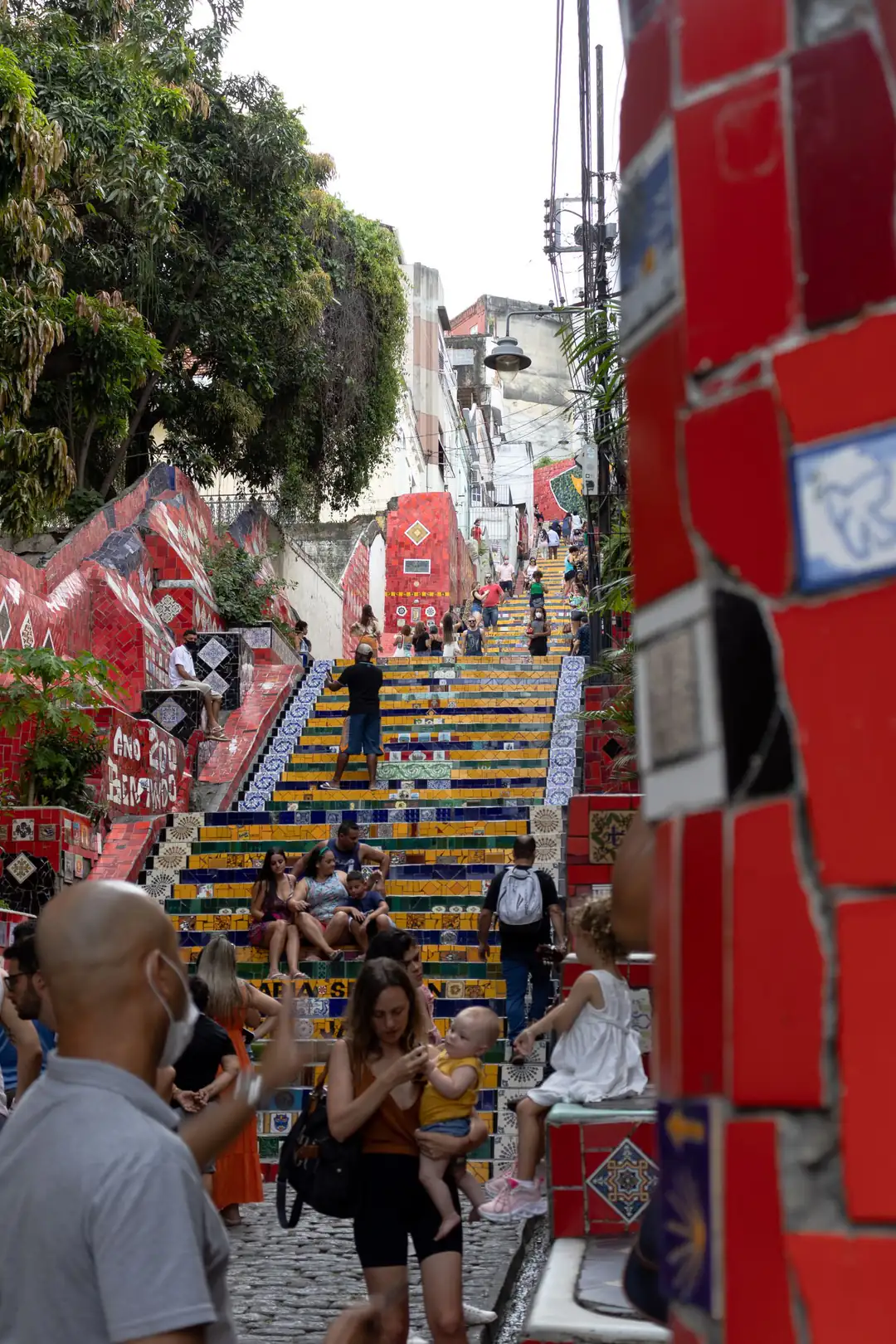
The colourful Escadaria Selarón is a natural next stop on the Lapa–Santa Teresa edge. Use a live walking map through the local streets and allow time for traffic crossings and the uphill approach. The stairs are a public artwork and can get crowded; go early if you want to look at the tiles rather than only the queue of cameras.
From the Steps, you can continue into Santa Teresa if you are comfortable with hills and have a clear route. Otherwise return towards Cinelândia or use a car. For a longer, easier-to-plan daytime sequence, pair the arches with the Cinelândia square and its theatre and library.
Should you ride the tram too?
Yes if you want a journey into Santa Teresa, rather than only a view of the tram crossing. The line starts at Carioca station on Rua Lélio Gama, away from the plaza below the arches. Check the Santa Teresa tram guide for boarding, ticket and return decisions. If the tram queue is long or service is interrupted, the arches are still worth seeing from the ground.
FAQ - Lapa Arches, Rio
What are the Lapa Arches called in Portuguese?
They are the Arcos da Lapa, originally the Aqueduto da Carioca.
Were the arches built for the tram?
No. They were built as an aqueduct; the tram began using the structure later.
Is it free to see the Lapa Arches?
Yes. The monument can be viewed from the public square without a ticket.
Can you walk on top of the arches?
No. The upper route carries the tram and is not a pedestrian walkway.
Where should you stand for a photo?
Start at Praça Cardeal Câmara and step back to include the full line of arches.
How far are the Selarón Steps?
They are in the neighbouring Lapa–Santa Teresa area. Use a live map for the short walk and uphill streets.
Can you board the tram below the arches?
Plan to board at Carioca station on Rua Lélio Gama, not in the square beneath the viaduct.
Is it better to visit by day or night?
Daylight is easier for a first look at the architecture and for continuing on foot to nearby sights.